Autonomous Delivery Robots in Urban Environments
Cost pressures and narrow sidewalks are finally making robot delivery economics work.
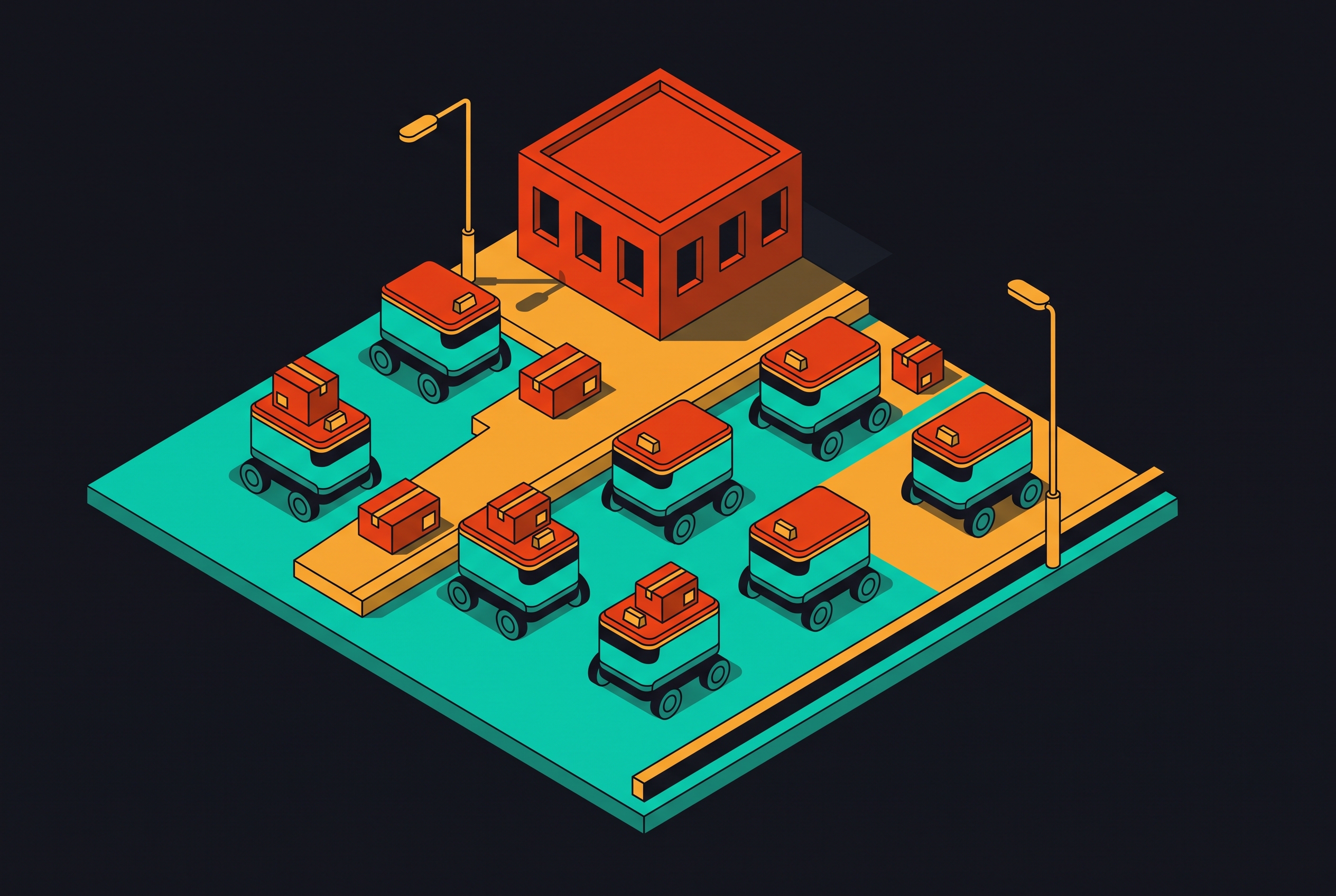
Last-mile delivery eats up more than half of total shipping costs, and the reason robots now roll down sidewalks in Los Angeles and London, mostly ignored by the people stepping around them, comes down to a cost structure that finally broke enough for someone to fix it.
Driver turnover keeps climbing, order volume keeps climbing, and city streets stay exactly as narrow and clogged as they were a decade ago. More packages, fewer people willing to deliver them for minimum wage. A robot that runs 24 hours a day can cut delivery costs by up to 40% against a driver and a van, and that's the number that gets a budget approved.
Three research firms give three different answers to how big this market is, and all of them might be right at the same time. The gap comes down to what gets counted, not who counts better.
Narrow it to sidewalk robots only, and Mordor Intelligence has the market growing at nearly 20% a year through 2031. Spherical Insights, looking at roughly the same slice, has it growing faster still, at a pace of more than a fifth a year through 2035. Widening the lens to include drones and self-driving delivery vans sends the number to a different planet: $30.05 billion in 2024, heading toward $185.30 billion by 2033. None of these firms disagree about direction. They disagree about scope.
How Robots Actually Navigate a Crowded Sidewalk
A delivery robot is a rolling bundle of sensors making thousands of small decisions a minute. LiDAR builds a 3D map of the space around it. Cameras and computer vision spot pedestrians, curbs, dogs, traffic signals, and obstacles. GPS answers the big question of which street the robot is on, while proximity sensors handle the close-range job of not clipping someone's ankle.
The AI layer handles route planning, obstacle classification, and constant recalculation. A robot doesn't follow a fixed path. It builds its own route and rebuilds its picture of the world every second, because a city sidewalk changes too quickly to be mapped once and left alone.
5G lets a robot offload heavy computing to the edge, pull real-time map updates, and stay in constant contact with a fleet management system. Starship Technologies rolled out a fleet coordination upgrade built on its own machine-learning systems, letting robots share what they've learned across different cities and college campuses. Delivery times dropped 15 to 20%, with every robot in the fleet absorbing the same improvements simultaneously.
Which Robot Designs Are Winning Right Now
Sidewalk-only, outdoor robots dominate the market with 58% share by deployment type, Mordor Intelligence reports, because they use infrastructure that already exists. No new roads, no airspace permits. Just a sidewalk.
The fastest-growing category is hybrid all-terrain units, expanding at close to a third a year. A robot on a real delivery route might cross a lobby, roll over a plaza, then climb a ramp in a single trip, and single-environment robots fail at those handoff points where surface types change.
Four-wheel designs lead the market, with Coherent Market Insights putting them at nearly half in 2026. Four wheels offer more maneuverability than three, more stability than two, and less mechanical complexity than six. On payload, robots carrying under 10 kg made up close to half of the market in 2025 per Mordor Intelligence, a range suited to a burrito, a bag of groceries, or a prescription bottle.
Who Operates These Fleets & Where
More than 15,000 autonomous delivery robots and drones were running across the US, Western Europe, and East Asia as of mid-2024, clustered in cities like Los Angeles, London, and Shanghai. Serve Robotics, Starship Technologies, and a handful of other operators account for much of that count.
Starship Technologies passed 10 million completed deliveries in April 2026, running a fleet of about 2,700 robots with plans to scale toward 12,000 by 2027. It operates in roughly 30 European cities, more than 60 US college campuses, and raised $50 million in October 2025 from Plural, Karma.vc, Latitude, Coefficient Capital, SmartCap, and Skaala, pushing total funding past a quarter billion dollars.
Serve Robotics has crossed 100,000 completed deliveries, gone public, and expanded through an Uber Eats partnership into Los Angeles, Miami, Dallas, Chicago, and Atlanta, with DoorDash also running its own partnership in Los Angeles. Nvidia and Uber sit among its backers.
Avride pushed its own Uber Eats pilot into Jersey City in February 2025, running small sidewalk units.
Regulations Vary Wildly by City & State
These robots sit in a legal gray zone. They travel on pedestrian infrastructure but fall outside federal motor vehicle safety law, so no single national rulebook covers them. States and cities are filling that gap independently, in ways that frequently contradict each other.
Tennessee expanded the operating areas available to personal delivery devices. Georgia bumped its speed limit for these devices from four miles an hour to seven. Jackson, Wyoming and Knoxville, Tennessee banned sidewalk robots. San Francisco keeps them on a short leash. Chicago has imposed tight restrictions even as interest in the technology continues to grow.
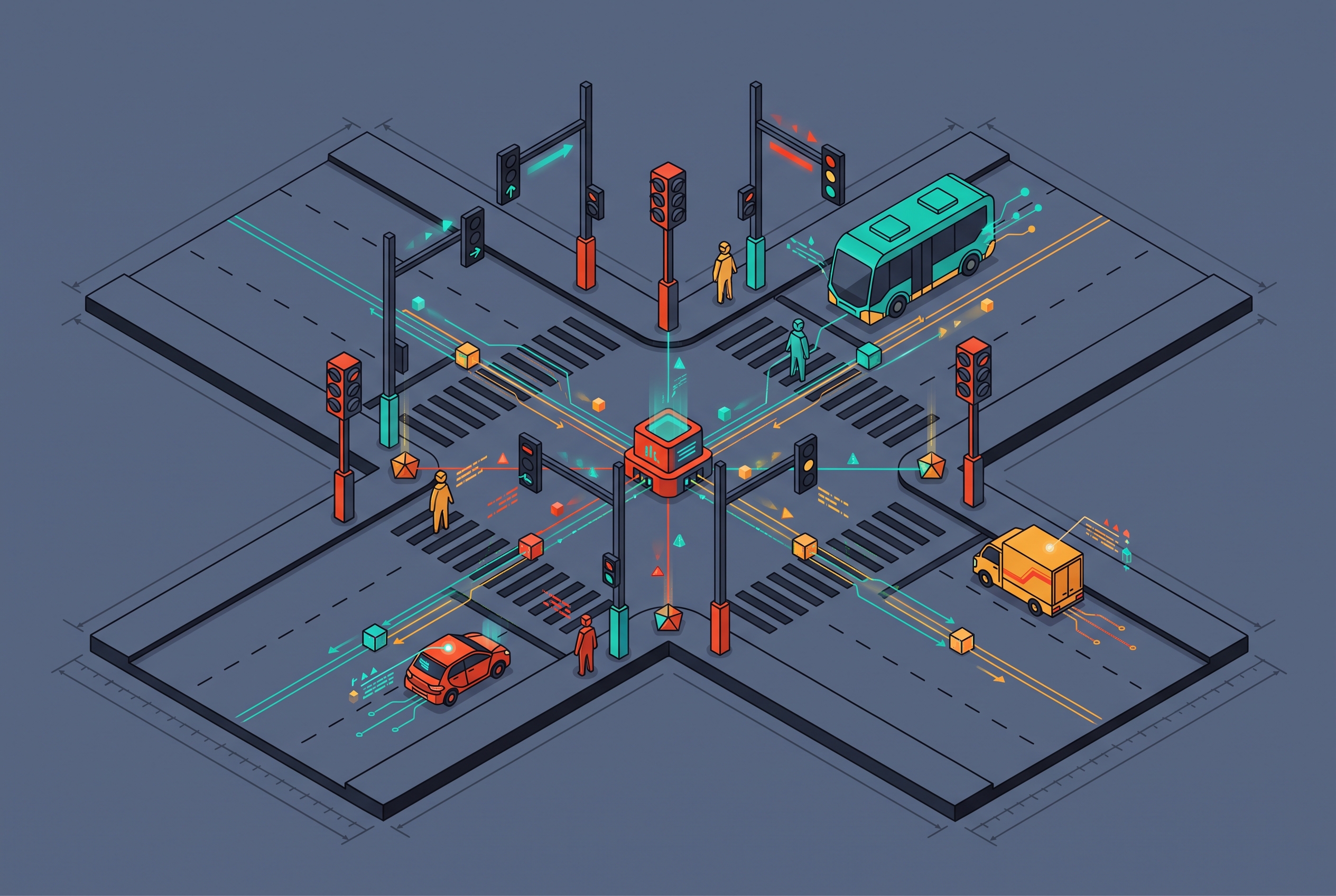
Robot deployment has consistently outpaced city planning, particularly on disability access, and that gap has fueled real pushback in the cities carrying the heaviest robot traffic. A city in China's Shanxi province took a different approach and built a city-wide intelligent intersection system specifically to support robot delivery. By 2025, that system helped robots complete an average of 2,500 orders per day, cut costs by 50% against manual labor, and enabled real-time route replanning. No US or European city has made that kind of coordinated infrastructure investment yet.
Where Adoption Is Growing Fastest
North America leads with 32.1% market share in 2024, supported by strong internet infrastructure, a high concentration of venture-backed robot companies, and a permitting environment that, while fragmented, is actively evolving.
Asia-Pacific sits close behind at 25% and is set to grow faster than any other region. Rapid urbanization, aging populations that need contact-free delivery for medication and everyday goods, and governments willing to fund smart-city infrastructure directly are all contributing factors.
Japan is a notable case. A national ministry overseeing economic and industrial affairs pushed autonomous delivery robots specifically to address labor shortages and delivery gaps for elderly residents. Legal reform opened public roads to these robots starting in April 2023, and further government-led work is examining how the same machines can serve home delivery, mobile vending, and business-to-business transport. Grocery and convenience delivery is the fastest-growing use case globally, expanding at close to a quarter a year through 2031 per Mordor Intelligence, concentrated in dense urban cores where small, frequent orders make the unit economics work.
Key Constraints Still Limiting Robot Deployment
With most units capping out around 10 kg, these robots cannot handle a bulk grocery order or a large parcel. They are built for high-frequency, low-weight orders. Outside that range, they do not compete with conventional delivery vehicles.
Sidewalk robots move slower and carry less than delivery drones, but perform more reliably in dense city environments. That tradeoff reflects a deliberate design choice about where these robots are intended to operate.
Weather and terrain remain real limitations. A robot tuned for flat, well-maintained sidewalks handles rain, snow, or a cracked curb poorly. Hybrid all-terrain models close some of that gap but carry higher costs and greater mechanical complexity.
Acceptance also varies significantly across regions, and this is where many expansion plans encounter resistance. A Journal of Urban Mobility survey of roughly 1,344 e-commerce customers across the US, Europe, and Asia found that ease of use drives acceptance broadly across all three regions, but US and European customers weigh cost and perceived risk more heavily, while European and Asian customers are more influenced by social norms around whether people in their communities are comfortable sharing sidewalks with delivery robots. No single rollout plan works everywhere, and operators expanding across borders continue to learn that through experience.
Sources
- Autonomous Delivery Robots Market Analysis and Growth
Provided the growth rate figure for the autonomous delivery robot market through 2035 cited in the market size comparison.
- Autonomous Delivery Robots Market Size, Growth Trends, Forecast 2026 – 2031
Provided market share figures by deployment type, payload range, and regional adoption percentages cited throughout the article.
- Autonomous Delivery Robots Market Size & Forecast, 2026-2033
Provided the four-wheel robot market share figure for 2026 cited in the design comparison section.
- Autonomous Delivery Robots Market Size & Share 2026-2032
Provided the $50 million funding figure for Starship Technologies' October 2025 raise cited in the fleet operators section.
- https://www.intelmarketresearch.com/autonomous-delivery-robots-market-43292
Provided the 40% cost reduction figure comparing robots to drivers and vans cited in the opening section.
- https://njbikeped.org/autonomous-delivery-robots-in-jersey-city/
Provided details on Avride's Uber Eats pilot launch in Jersey City in February 2025.
- https://roboticsandautomationnews.com/2026/04/29/starship-passes-10-million-deliveries-as-autonomous-delivery-moves-toward-mainstream-adoption/101097/
Provided the milestone figure of 10 million completed deliveries by Starship Technologies as of April 2026.
- https://cxtms.com/blog/autonomous-delivery-robots-beyond-sidewalks-state-laws-last-mile-2026
Provided details on city-level regulatory variations including San Francisco's restrictions on sidewalk robots.