Curtailment Risk Management for Renewable Energy Projects
Renewable projects must now model curtailment as a core financial risk.
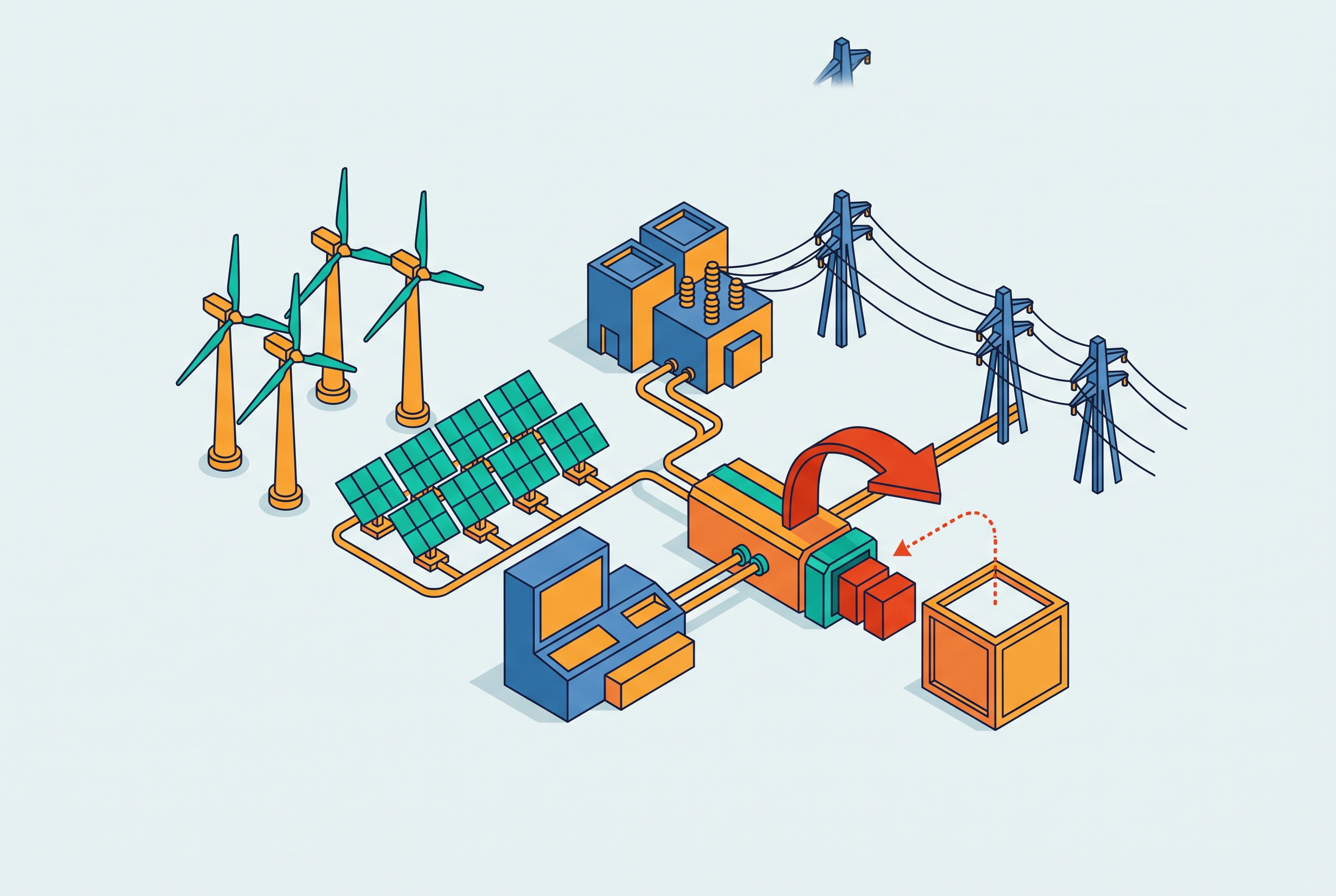
Curtailment is the deliberate reduction of a power plant's output below what it could actually produce, ordered by grid operators to keep supply and demand in balance. For wind and solar projects, which cost almost nothing extra to run once built, every curtailed megawatt-hour is money gone with nothing saved on the other side. There's no fuel bill to offset, no spared diesel, just lost revenue.
Japan offers the clearest proof that this risk has outgrown its old label of "rare inconvenience." TEPCO's service area, the largest demand zone in the country and a region long treated as rock-solid stable, experienced its first-ever curtailment event in March 2026. If the biggest, steadiest market in Japan can get curtailed, size and stability stop being protection. The same pattern appears elsewhere: ERCOT's Route 66 Wind node ran at zero output, fully curtailed, on May 3, 2025, and California has posted monthly curtailment volumes in the hundreds of gigawatt-hours during recent spring months. These aren't freak accidents at troubled plants; they are becoming routine math across markets of very different sizes and designs.
That shift changes what curtailment means for anyone evaluating a renewable project. Power generation operators now need to treat it as a line item in financial models, not a footnote in an operations manual. Projected curtailment has to be built into asset design and revenue simulations from day one, the same way fuel cost or maintenance downtime would be modeled for a conventional plant. If that step is skipped, the investment case is built on output numbers the grid was never going to deliver.
Four structural mechanisms that produce curtailment
Curtailment is four separate mechanisms, each with its own cause and its own fix, and all four are getting worse at the same time.
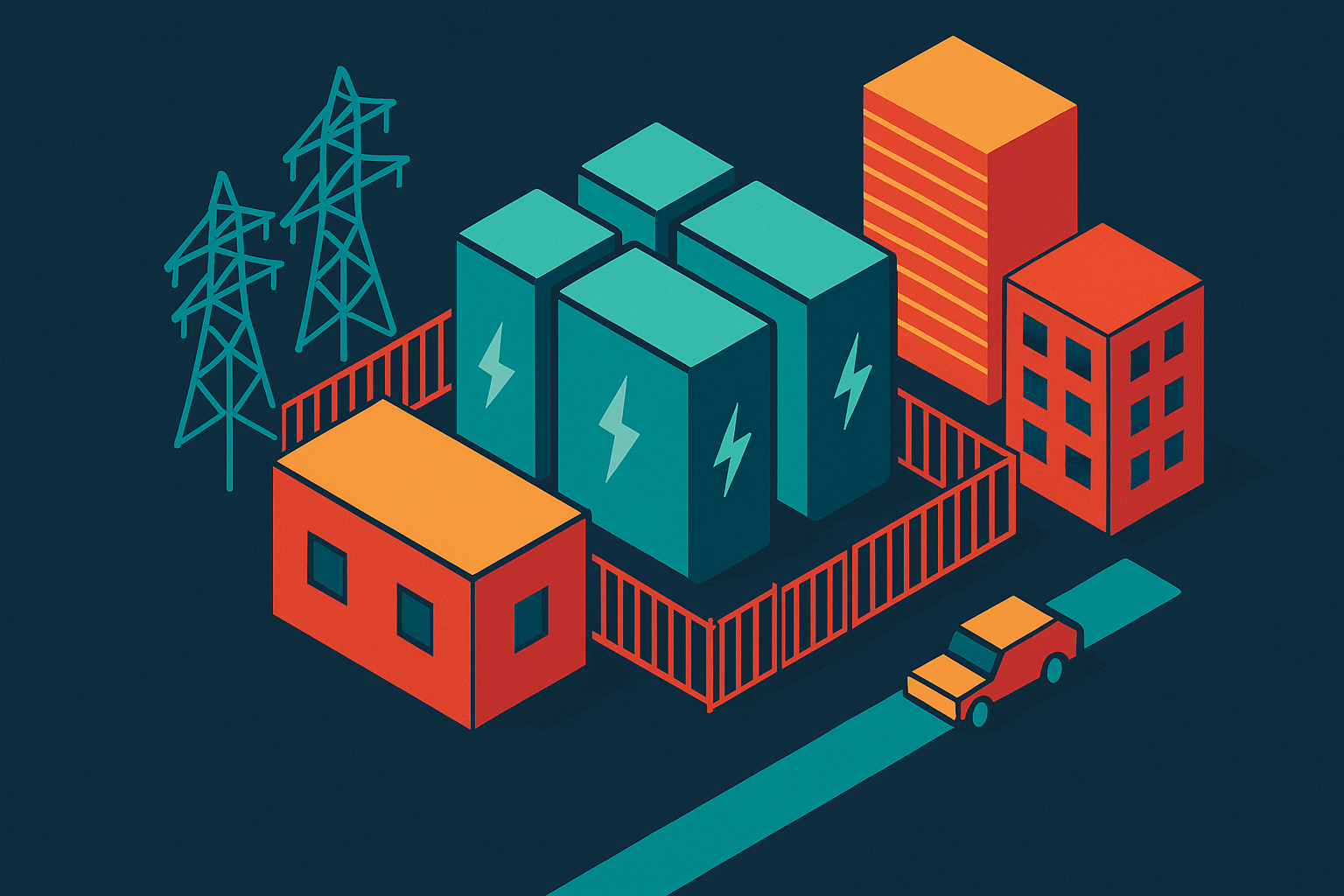
Transmission congestion happens when wind and solar farms generate more power than the physical lines can carry to where people actually use it. ENTSO-E's TYNDP 2026 planning report names grid expansion as the single biggest obstacle to Europe's energy transition, and most of the reinforcement projects needed to fix it won't be finished until after 2027 or 2028. Thermal inflexibility is the second mechanism: coal and nuclear plants have minimum output levels they can't drop below, so during low-demand hours they hog grid space that renewables could otherwise fill, and operators curtail the wind and solar instead of asking a coal plant to throttle down further than its equipment allows. Third, minimum-inertia requirements force grid operators to keep a certain amount of spinning, synchronous generation online at all times, because that's what maintains frequency stability. That rule alone can trigger curtailment even when the wires have plenty of spare capacity and prices haven't gone negative. Grid-forming inverters and synchronous condensers are the main tools built to fix this specific mechanism.
The fourth mechanism is the one that catches most people off guard: market design itself manufactures curtailment that doesn't need to happen. Feed-in tariffs and hourly contracts for difference pay generators a fixed rate no matter what the wholesale market is doing, so a wind farm earning a guaranteed tariff has zero financial reason to switch off even when the price it would get for selling power has gone deeply negative. Feed-in tariffs and similar guaranteed-rate contracts have left a policy structure built for an earlier era still running on autopilot while the market underneath it has changed. Contract design, covered later, is where this gets fixed project by project.
How curtailment exposure is unevenly distributed across project stakeholders
Curtailment losses don't land on everyone attached to a project the same way. Who actually eats the cost depends on contract terms, project type, and where in the financing stack a given party sits.
PPA offtakers feel it as a quiet erosion of the deal they thought they signed. A power purchase agreement's real value depends on more than the agreed strike price: it depends on when the project actually generates, where that generation settles on the grid, whether curtailment strikes during the hours that matter most, and how the contract handles negative-price periods. An offtaker can hold a PPA that looks solid on paper while the underlying hedge quietly loses value, hour by hour, and no clause ever gets technically violated.
Senior lenders carry a different kind of exposure. Uncompensated curtailment can directly weaken a project's ability to make debt payments, and that risk has changed how capital flows into the sector. Lenders and institutional equity investors who once treated a signed PPA as proof of guaranteed output are now far more cautious, and they're rewriting how they underwrite clean energy deals to account for the gap between contracted output and what the grid will actually allow through.
Equity investors sit closest to the raw economics. The entire investment case for a renewable project rests on energy yield assumptions, and a sustained curtailment rate chips away at those assumptions year after year. Even a moderate annual curtailment rate, compounded over a 20-year project life, can cut projected revenue by a meaningful share of the total return.
Curtailment there functions as a standard operating tool, and every asset built going forward has to assume curtailment as a baseline condition. A financial model that leaves curtailment out is unbankable.
Siting decisions that reduce curtailment exposure before a project is built
The single biggest lever for managing curtailment risk gets pulled before a single turbine is bolted down: where the project gets built. A project dropped onto a chronically congested grid node inherits a structural curtailment problem that no amount of clever operations can fully undo later.
You need node-level congestion analysis in the first pass of site selection, not buried in late-stage due diligence. That means pulling historical locational marginal price (LMP) data for the node, checking the basis differential between the project's node and the nearest trading hub, and reviewing the grid operator's interconnection queue to see how much other generation is already lined up to compete for the same limited transmission capacity.
ERCOT's own planning documents flag specific areas as already constrained, and the numbers explain why: by the end of 2026, more than 114 GW of transmission-connected wind, solar, and battery storage is projected to be installed across ERCOT. A developer who sites into one of these already-crowded corridors without checking that queue first is signing up for congestion that's baked in from day one.
Proximity to flexible load helps counter that risk. Data centers are turning into permanent demand anchors in European markets, and they're driving longer, more sophisticated corporate PPAs as a result. A project sited near a steady, local buyer with flexible demand has a built-in outlet for its generation that reduces reliance on long-distance transmission.
Timing matters just as much as location. ENTSO-E's TYNDP 2026 confirms that most European transmission reinforcement projects won't be finished until after 2027 or 2028, so a project built today on the hope that relief is coming soon could operate for years before that relief arrives. ERCOT's own Permian Basin Reliability Plan, which proposes a new 765-kV transmission backbone, is a useful illustration of both sides of this coin: real relief is coming for that corridor, but it needs years of permitting and construction before any project connected there sees the benefit. Good siting buys time, not immunity, so contract terms and operational tools still matter for projects that are already locked into a location.
Contract structures that allocate and cap curtailment risk
Good siting narrows the risk. Contract terms decide who actually pays for what's left. Leaving those terms vague hands the full financial exposure to whichever party has the least leverage at the negotiating table, usually the smaller counterparty.
Bankable PPAs in markets with high renewable penetration now spell out economic curtailment risk directly, using one of three approaches: assigning the risk to the offtaker, splitting it between both parties under a defined cap, or building a curtailment premium into the strike price from the start. The Brazilian Northeast market has already tested this third approach, embedding an explicit curtailment premium into agreements signed in 2025.
Lenders financing merchant projects now model three separate variables before committing capital: forecasts for hub pricing, the basis differential between the project's node and the trading hub, and the probability of curtailment driven by grid congestion at that specific location. If any one of the three is skipped, the underwriting isn't complete.
Negative-price clauses are where a lot of these negotiations get decided. The share of hours with negative day-ahead prices has climbed to around 6% across many European markets, so if a PPA stays silent on what happens during those hours, a generator can end up stuck under a feed-in tariff or contract-for-difference structure that was written before negative pricing was common. Silence in the contract doesn't protect anyone; it only defers the argument to whenever the losses surface.
Financial transmission rights offer one more layer of protection, hedging the basis gap between a project's node price and the hub price. They address the financial sting of congestion, not the congestion itself, and they do little to push anyone toward building the new transmission lines that would solve the underlying constraint. No contract clause fixes a undersized power line. It can only decide who pays for the shortfall.
Co-located storage as an operational hedge against curtailment losses
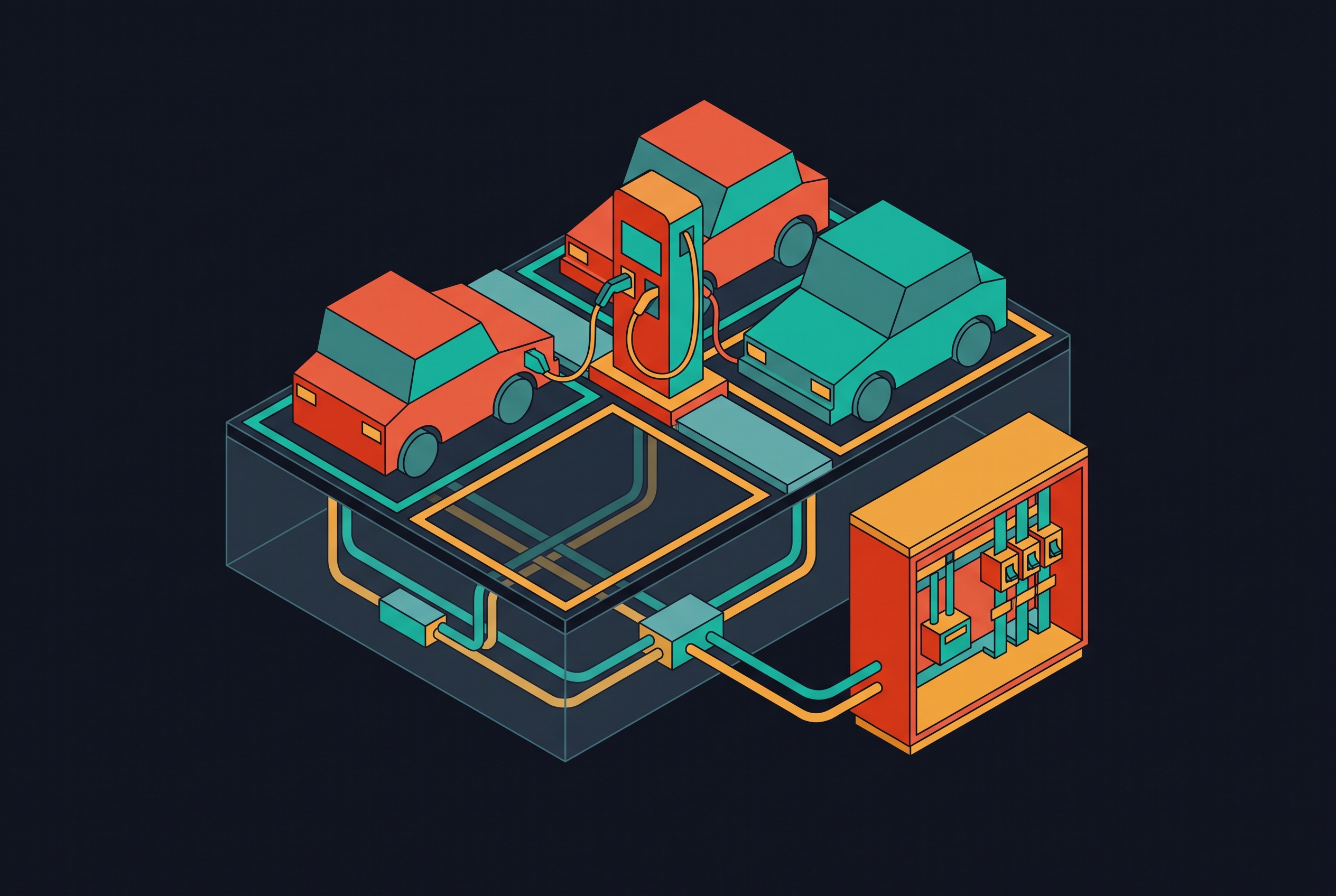
Pairing battery storage with a wind or solar project has gone from a nice-to-have optimization to close to a requirement for financing new utility-scale projects in markets with heavy curtailment. Lenders increasingly expect to see it in the plan before they'll sign off.
Across Europe, battery energy storage systems (BESS) moved from small pilot programs to core infrastructure by 2026, used to smooth out intraday price swings, cut curtailment exposure, and provide grid stability services that used to require conventional generation. California shows the scale this can reach: CAISO's battery storage capacity grew from 500 MW in 2020 to more than 13 GW by early 2025. Trading excess power through the Western Energy Imbalance Market avoided 274,000 MWh of curtailment in 2024, and solar curtailment fell in 2025 even though average solar generation rose, largely because batteries charged up during the midday glut.
For lenders, storage offers something concrete to underwrite. A hybrid solar-plus-storage plant can soak up extra midday generation, shift it to sell during the evening peak, demonstrate it's meeting its PPA commitments, and earn extra revenue from grid services along the way. All of that strengthens the case that the project can keep servicing its debt even when curtailment cuts into revenue.
Storage has a real limit. Most battery capacity deployed today is built for short cycles, a few hours of charging and discharging, and it can't absorb the multi-hour or multi-day curtailment stretches that ERCOT and other grid operators are now reporting. Neither ERCOT nor CAISO currently has enough storage, in the locations where it would matter most, to fully cancel out curtailment driven by transmission bottlenecks. Storage is a strong hedge. It isn't a substitute for fixing the wires.
Transmission upgrades and dynamic line rating as longer-horizon curtailment fixes
Physical transmission limits cause more curtailment than any other single factor, and no amount of storage, clever contracts, or forecasting fully makes up for a line that's too small to carry the power. Grid operators do have one tool that works fast: dynamic line rating (DLR), which lets existing power lines carry more electricity by adjusting their rated capacity based on real-time weather conditions like wind speed and temperature, instead of relying on fixed, conservative limits set years in advance.
The clearest evidence that fixing transmission actually solves curtailment, not just shifts around who pays for it, comes from ERCOT's own history. After ERCOT built a new transmission line connecting the Competitive Renewable Energy Zone in West Texas to the state's load centers in 2013, curtailment in that corridor dropped from a high rate to close to zero. That's the model other regions are chasing, at very different speeds.
ERCOT's Permian Basin Reliability Plan, centered on a possible new 765-kV transmission backbone, is the slow, heavy-infrastructure path to relief. CAISO's Extended Day-Ahead Market (EDAM), expected to go live by May 2026, represents the faster, market-design path: it lets excess solar power reach a wider pool of regional buyers a day ahead of time, without laying a single new wire. Between these two sits the real tradeoff facing every grid operator: DLR and market tools move fast but only unlock incremental gains, while new transmission lines take years to permit and build but deliver the kind of structural fix ERCOT saw in that 2013 corridor. Europe is living this tradeoff right now. ENTSO-E's TYNDP 2026 names grid expansion as the main bottleneck to the continent's energy transition, but most of the needed projects won't materialize until after 2027 or 2028. DLR and market-design fixes matter as the bridge for projects that need relief sooner than new steel in the ground can provide it.
Forecasting and market-design tools that reduce preventive and economic curtailment
A meaningful share of curtailment happens for a reason that has nothing to do with physical grid limits: operators order it because they can't predict output accurately enough to trust the grid will handle it. This is preventive curtailment, issued out of caution rather than necessity, and it's the one category where better forecasting delivers a direct, measurable fix. The more precisely a grid operator can predict how much a wind or solar farm will generate in the next few hours, the less margin of safety it needs to build in, and the less renewable output gets switched off just in case. Combined with the siting discipline, contract structures, storage hedges, and transmission investments covered earlier, accurate forecasting closes the loop on a risk that renewable project developers can no longer afford to treat as someone else's problem to solve.
Sources
- Renewable Energy Trends in Europe 2026
Provided context on European battery storage growth, data center demand anchors, ENTSO-E grid expansion timelines, and CAISO storage figures cited throughout the article.
- Curtailment (electricity)
Supplied the foundational definition of curtailment as deliberate reduction of output below potential, which opens the article.
- Do wind and solar curtail at negative electricity prices? Incentives and evidence across two decades of German renewable support schemes
Provided the statistic that negative day-ahead prices now occur in around 6% of hours across many European markets, and context on how feed-in tariff and CfD structures interact with negative pricing.
- Revisiting grid flexibility techniques for minimizing renewable energy curtailment - ScienceDirect
Informed the discussion of grid flexibility techniques including grid-forming inverters, synchronous condensers, dynamic line rating, and storage as tools for minimizing curtailment.
- Modelling Renewable Curtailment and Constraints in Ireland's Electricity System
Provided analysis of minimum-inertia requirements as a curtailment trigger even when transmission capacity is available, informing the article's third structural mechanism.
- Wind and solar: curtailments over time? - Thunder Said Energy
Supplied historical curtailment trend data, including the ERCOT West Texas corridor example showing curtailment dropping to near zero after the 2013 CREZ transmission line was built.