Enhanced Frequency Response Services and Market Participation
Batteries are reshaping how Britain's grid stays stable as renewables replace spinning turbines.
Keeping the lights on comes down to one number: grid operators have to hold system frequency within one percent of 50 Hz, all day, every day, and frequency response is the automatic mechanism that makes that possible. For decades, that job was easier than it sounds, thanks to inertia: the kinetic energy stored in the spinning mass of turbines at gas, coal, and nuclear plants, which acts like a shock absorber and slows down how fast frequency can swing after generation and demand fall out of balance.
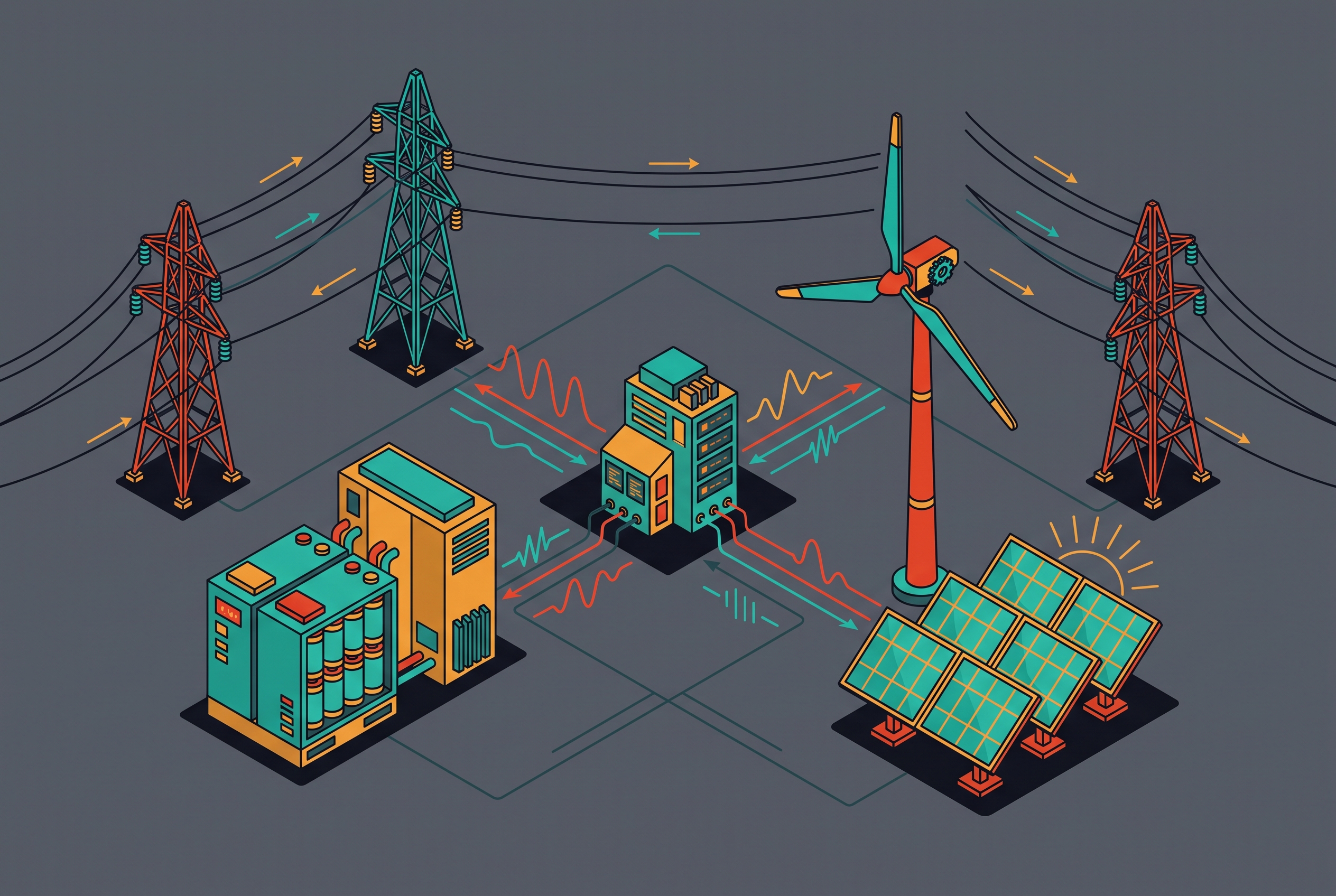
The trouble is that wind and solar don't spin the way a steam turbine does. They connect to the grid through power electronics, contributing exactly zero rotational mass. Every gigawatt of renewables that replaces a synchronous plant quietly drains a bit of that shock-absorbing capacity. Less inertia means frequency swings faster and harder after any disturbance, and researchers have been clear that response services now need to act within a single second to keep up. NESO's own numbers show the system inertia floor has been cut from 140 GJ in 2022 down to 96 GJ today, formally acknowledging that the safety buffer is thinner than it used to be. Every product discussed in this piece exists because of that one fact.
Why EFR Was Built From Scratch
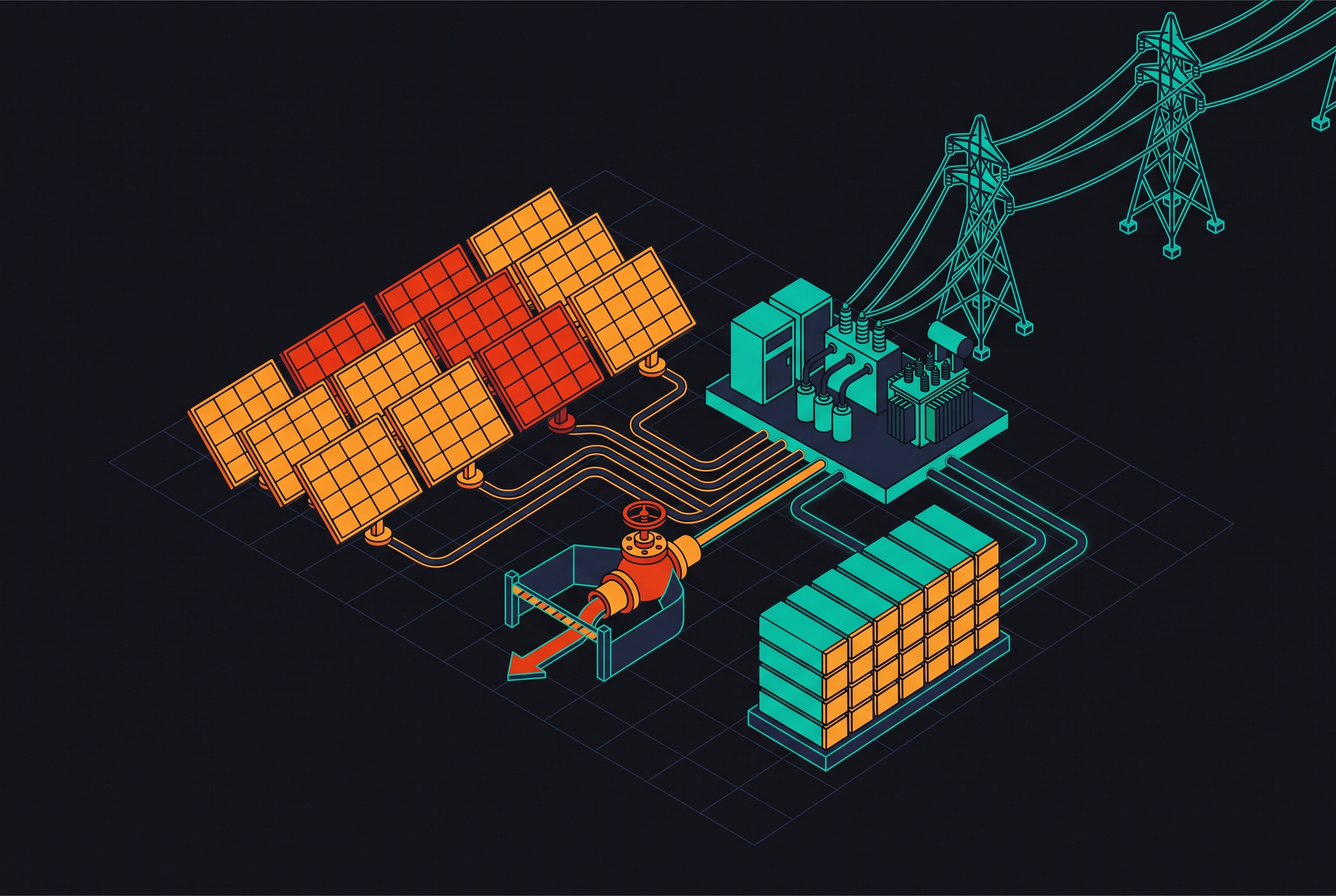
Legacy frequency response tools were built for a grid full of spinning turbines and slow-moving disturbances. They were never designed to catch a frequency dip in well under a second, and as renewables piled onto the system, that gap became impossible to ignore. Enhanced Frequency Response, or EFR, was National Grid's answer: the first frequency response service built from scratch for sub-second delivery, designed to test whether fast-acting batteries could do this job reliably and be compensated for it.
A 2017 IEEE paper by Cooke, Strickland, and Forkasiewicz documented National Grid actively investigating energy storage as a fix for declining system inertia, and framed EFR explicitly as a response to the growing share of power-electronic-connected generation on the system. Batteries were included from the outset because nothing else on the grid could respond in milliseconds the way a battery can, and that speed was the entire point of the service. EFR proved the concept worked, commercially and technically, but it was always designed to evolve into something broader and more competitive.
DC, DM, & DR Replace EFR
That evolution produced the Dynamic Response suite after two years of industry consultation. The flagship product, Dynamic Containment, is described by NESO as an evolution of EFR.
Dynamic Containment is the post-fault responder. It activates once frequency has already deviated by 0.5 Hz and is built to sustain a response through a major disturbance, delivering within one second. Dynamic Regulation runs continuously, reaching full delivery within seconds at a tighter 0.2 Hz threshold, and its job is holding steady-state frequency stable rather than reacting to a shock. Dynamic Moderation is the pre-fault buffer against sudden volatility such as gusting winds and abrupt output changes, also initiating and reaching full delivery within seconds and operating to a ±0.2 Hz activation threshold.
DM absorbs everyday volatility before it becomes a problem, DR keeps the system anchored during normal operation, and DC activates after something has actually gone wrong. At launch, NESO procured 500 MW of low-frequency response with an explicit plan to grow that to 1 GW and add high-frequency response on top. The auction platform evolved from EPEX SPOT to the EAC platform built with N-SIDE and SOOPs, pushing procurement closer to real time. On its opening day alone, 10,284 MW was traded. DC launched on 1 October 2020, with NESO's first tender accepting two battery energy storage units delivering 90 MW of fast response. These three products now operate as one integrated suite.
How Assets Qualify & Bid Today
Dynamic Containment is open to every technology type. In practice, batteries are expected to dominate this current phase because nothing else can match their millisecond response time on a grid running with less inertia than it used to have. Hydro plants and demand-response aggregators are not excluded, but they are competing against a technology with a significant speed advantage.
The mechanics of participation changed meaningfully as of January 2026. DC, DM, and DR are now activated directly inside the Operational Balancing Process, or OBP, making Dynamic Response part of the core dispatch workflow rather than a separate ancillary product. That matters for anyone optimising a portfolio, because it changes how these services interact with everything else happening on the system in real time.
NESO's stacking guidance spells out how providers can combine DC, DM, or DR, or the older Static Firm Frequency Response, with bid-offer acceptances in the Balancing Mechanism or other balancing services. Committing capacity to one service while also trading in another can create obligation conflicts if not managed carefully. On 1 May 2026, NESO submitted its EBR Article 18 consultation to Ofgem, proposing changes to Dynamic Response Services including improvements to performance monitoring and penalisation, so providers should expect compliance requirements to tighten as the market matures.
Why Batteries Dominate Fast Frequency Markets
Globally, frequency regulation accounted for 81.7% of grid-scale stationary battery storage revenue in 2025, with a projected annual growth rate of 22.7%. That is the dominant use case, and it explains why every battery developer in Britain has been focused on these markets.
The reason comes back to the same physics described above: batteries can absorb and release energy in milliseconds, which makes them uniquely suited to a grid that has less inertia to lean on than it used to. GB's pipeline reflects that appetite. NESO expects to award connection agreements to more than 283 GW of generation and storage capacity by 2035, over 80 GW of which is battery storage. As of 2026, roughly 22 GWh of battery storage is under construction in GB, more than 13 GWh is already operational, and around 30 GWh was consented in 2025 alone. That volume sets up a predictable question: what happens to revenue per megawatt when supply increases this rapidly?
Revenue Compression as Battery Supply Surged
It drops, and it has dropped substantially. In 2022, frequency services made up the large majority of a typical GB battery's revenue stack. By 2024, that share had fallen sharply, according to UK energy storage market analysis drawing on BloombergNEF, Aurora, Modo Energy, and RaboResearch. Modo Energy's data shows energy arbitrage climbing from a small slice of revenue in 2022 to nearly half by 2024, a structural reversal rather than a temporary shift.
Dynamic Containment pricing hit a low of £41,000 per megawatt per year in February 2026, then recovered sharply in March as record gas prices pushed up Balancing Mechanism activity, before easing back approximately 6% in April as solar drove daytime prices deeply negative. The long-term trend still points down from the highs of 2021 and 2022, but the shorter-term story is about volatility rather than a steady decline. FCR prices in Germany have faced the same squeeze, and revenue per megawatt across European battery markets varies considerably depending on how mature and how saturated each country's ancillary services market is.
Stacking Revenue Streams Across Multiple Markets
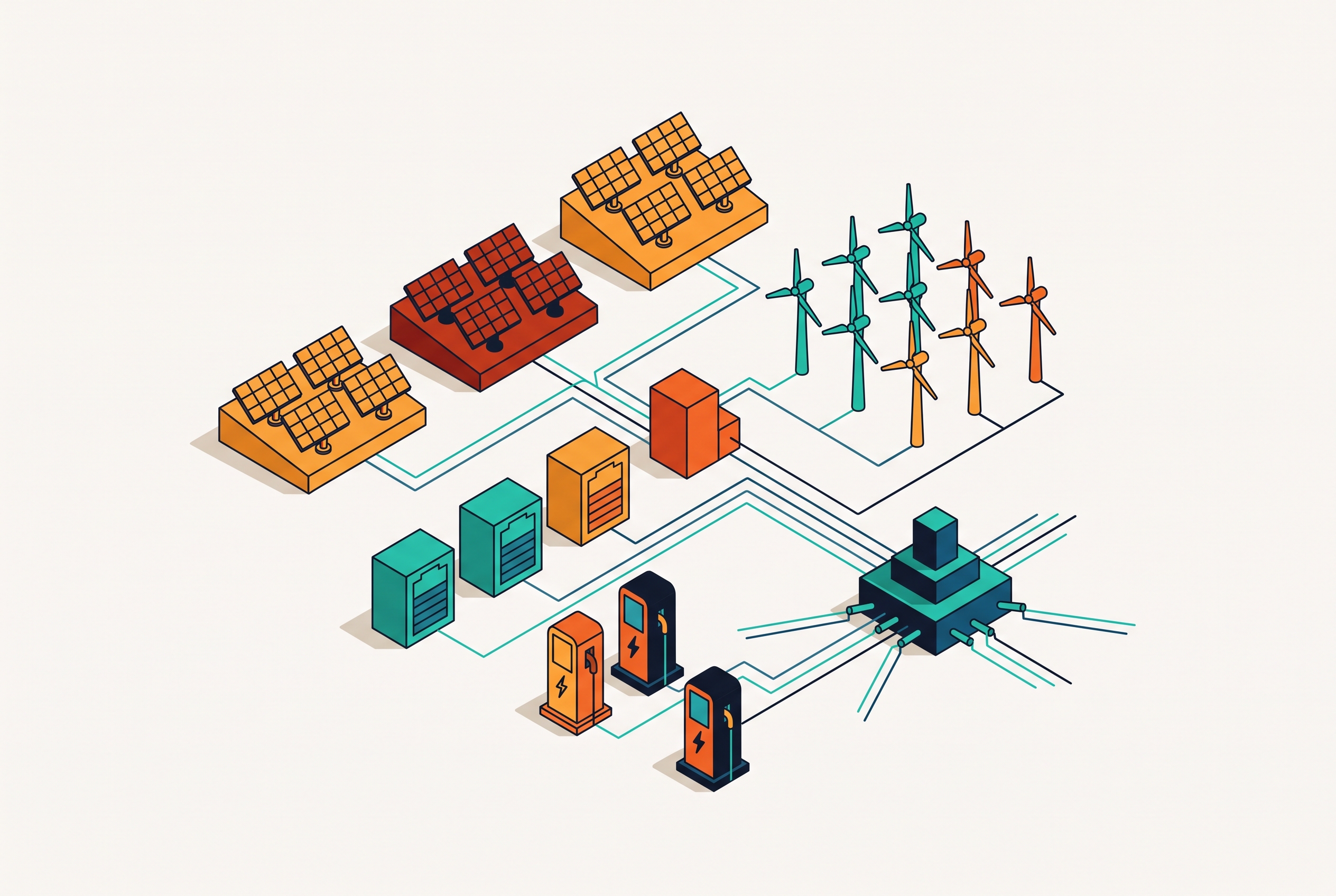
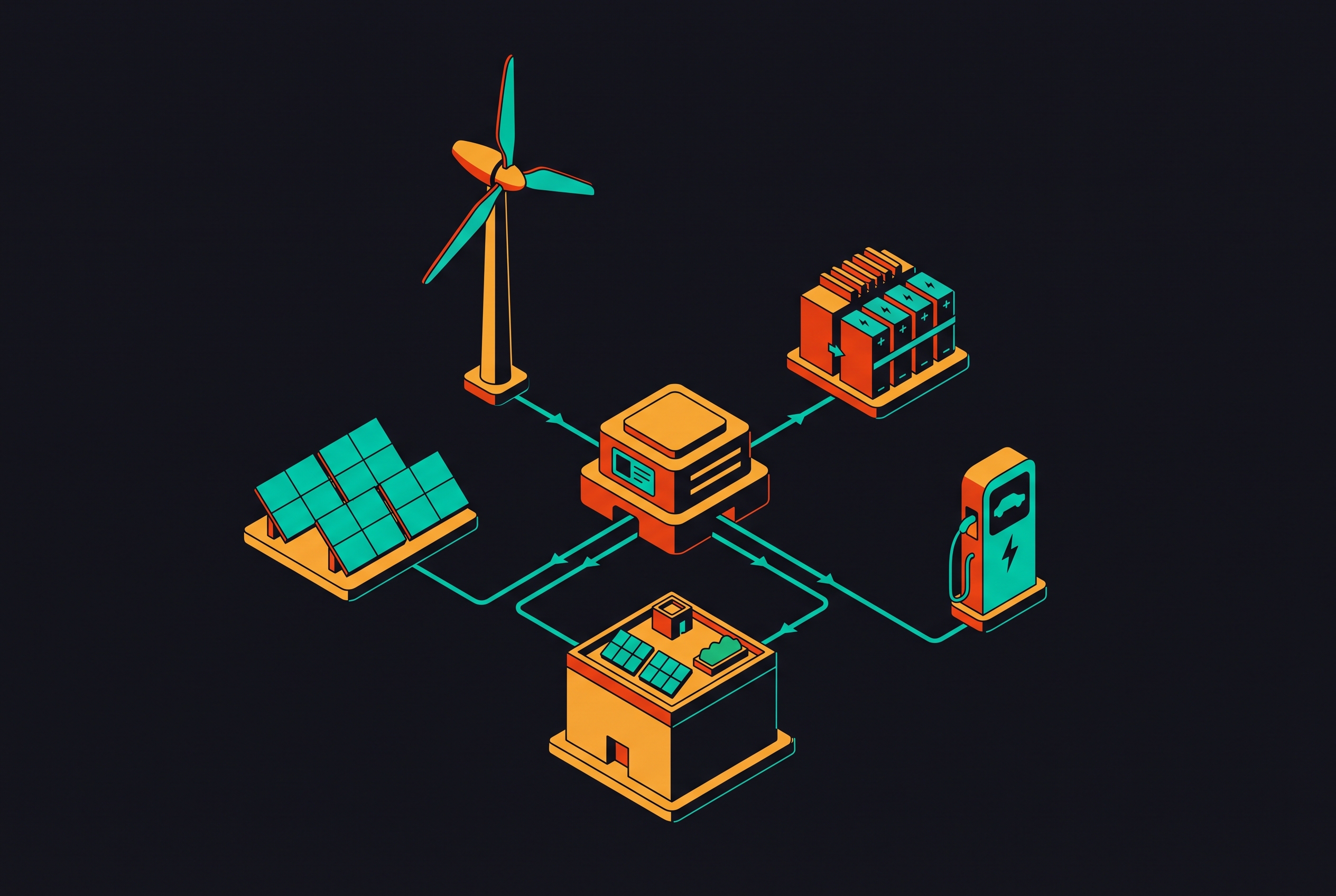
Faced with a single revenue stream that no longer pays what it used to, operators have moved to layering income from DC, DM, DR, Capacity Market contracts, Balancing Mechanism trading, and wholesale arbitrage. This has become the standard commercial model for grid-scale batteries in GB.
None of that stacking works without a clear understanding of how simultaneous obligations interact, because switching between markets in real time without accounting for the overlap creates basis risk. Across optimised European deployments, ancillary services and balancing markets typically contribute somewhere between 40% and 70% of total revenue rather than pure arbitrage. Markets like Sweden and Finland, with strong FCR-D and FFR pricing, demonstrate that ancillary services can still be genuinely lucrative where supply has not yet caught up with demand. Standalone tolling deals across Europe rose noticeably between 2024 and 2025, with the UK sitting at the centre of that shift.
Locational Pricing & Ongoing Reform Ahead
The pace of change through 2026 and into 2027 makes clear this market is not settling down. Locational Procurement will introduce geographic signals into what has been a national market, meaning assets in constrained areas may earn different prices, changing the calculus for where new battery projects are sited.
Reform extends beyond Dynamic Response. Mandatory Frequency Response and Commercial Frequency Response are both under comprehensive review, with aspects under evaluation including partial activation, service duration, procurement granularity, submission timelines, and payment structures. Static Firm Frequency Response is being integrated into the wider Dynamic Response suite rather than left as a separate legacy product. Internationally, HVDC-connected offshore wind is emerging as an additional provider of fast frequency services, and a July 2026 arXiv review covering ENTSO-E, ACER, NESO, TenneT, and Energinet developments suggests the provider base for frequency markets will broaden beyond batteries over the coming decade.
NESO's reform pipeline for 2026 to 2027 is substantive: OBP integration of DC, DM, and DR went live in January 2026, the Article 18 consultation on performance monitoring and penalisation was submitted to Ofgem on 1 May 2026, and a formal consultation on Locational Procurement is planned for the second half of 2026, with the change expected live early 2027. NESO's "Future of Response Services" page, updated through July 2026, shows active consultation documents including a "Consultation go live update (Dynamic Response & SFFR)" dated 16 July 2026, a "Real-time Dynamic Response Detailed Service Design v2" dated 10 June 2026, and a "Request for Information MFR & DR" dated 28 May 2026.
Sources
- New fast frequency product to boost National Grid ESO’s response capability | National Energy System Operator
Provided the detail on the EAC platform and the 10,284 MW traded on its opening day.
- Future of response services | National Energy System Operator
Source for the active consultation documents and reform timeline shown on NESO's Future of Response Services page.
- National Grid ESO debuts Dynamic Containment frequency response service | National Energy System Operator
Provided the launch details of Dynamic Containment, including the initial 500 MW procurement target and the first tender results.
- Energy storage for enhanced frequency response services | IEEE Conference Publication | IEEE Xplore
Cited as the 2017 IEEE paper by Cooke, Strickland, and Forkasiewicz documenting National Grid's investigation of energy storage for declining system inertia and framing EFR.
- Enhanced Frequency Response
Provided background on the EFR service design as the first sub-second frequency response product built for battery storage.
- Dynamic Services (DC/DM/DR) | National Energy System Operator
Provided specifications for the Dynamic Containment, Dynamic Moderation, and Dynamic Regulation services including activation thresholds and delivery times.
- Grid Scale Stationary Battery Storage Market Size, Forecasts Report 2026-2035
Provided the statistic that frequency regulation accounted for 81.7% of grid-scale stationary battery storage revenue in 2025 with a 22.7% projected annual growth rate.
- Fast Frequency Services from HVDC-Connected Offshore Wind Power Plants: A Review in the European Context
Source for the discussion of HVDC-connected offshore wind as an emerging provider of fast frequency services, covering ENTSO-E, ACER, NESO, TenneT, and Energinet developments.