Smart Energy Buildings and Demand Response Programs
Automated building systems unlock overlooked utility payments for commercial property owners.
Only a small fraction of U.S. energy consumers are enrolled in a retail demand response program, according to the American Council for an Energy-Efficient Economy. That number is striking when you consider that utilities actively pay enrolled buildings just to be available, not to curtail, but simply to be ready. The revenue is uncollected, and building owners aren't missing the memo on the incentives. The barrier is operational readiness. Most existing commercial buildings lack the connected systems and automation needed to execute load curtailment in response to a utility signal without someone physically intervening. A facilities manager has to notice the signal, decide what to adjust, and go adjust it. That process is too slow, too inconsistent, and too dependent on whoever happens to be in the building to satisfy utility program requirements.
Manual response fails utilities in a specific way. They need curtailment that is reliable enough to count on in real time, during the exact moments they are managing a stressed grid. A building that responds only when the right staff member is on shift is not one they can plan around. Beyond the automation gap, enrollment processes can be genuinely complex, building operators often aren't sure how much load they can shed without disrupting tenants, and internal expertise on demand response programs is rare outside of dedicated energy management teams. The programs exist. The payments exist. The question is whether a given building has the infrastructure to show up when called.
The Equipment That Turns a Building Into a Grid Asset
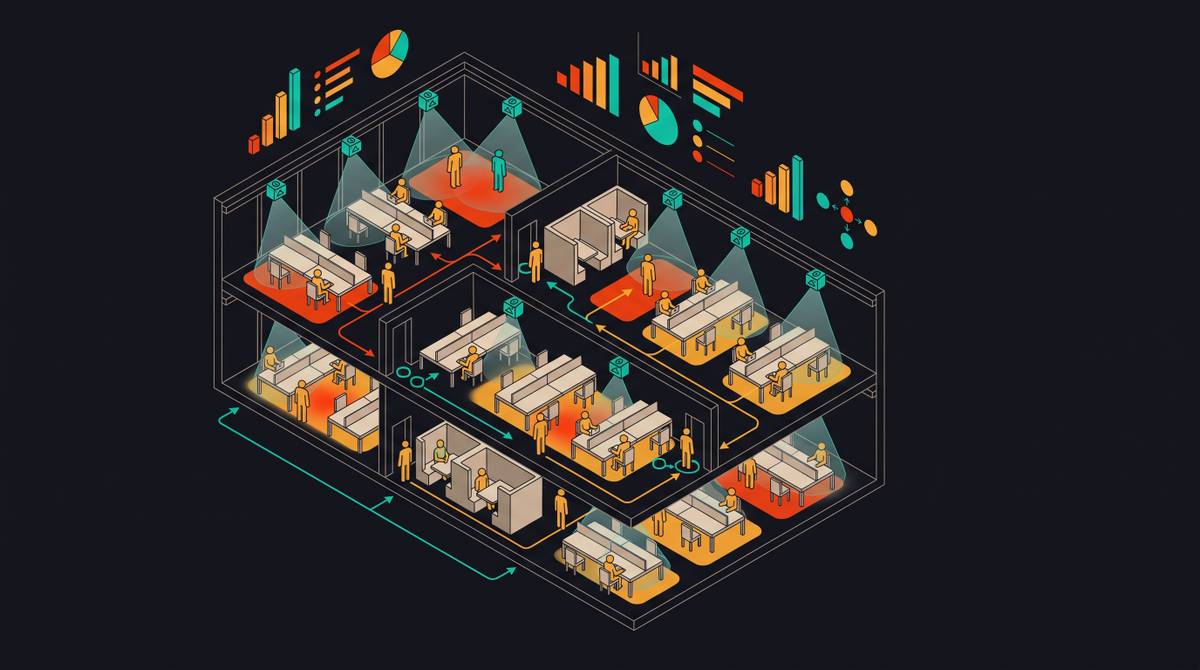
Connectivity is what turns individual equipment into a demand response resource. HVAC is where the action is. It is the largest controllable load in most commercial buildings, and the strategy is straightforward: pre-cool the space before a demand response event using the building's thermal mass as a buffer, then let the temperature drift upward within an acceptable range while the event runs. Occupants often don't notice, and the building has shed a significant chunk of load right when the grid needed it.
Lighting controls allow incremental load reduction without switching lights off entirely. Dimmable fixtures and occupancy-based zones can produce a 20% reduction across a large office floor without meaningfully affecting occupants. Building Management Systems and Building Energy Management Systems are the integration layer that makes HVAC, lighting, plug loads, and meters work together through a single controllable interface, ideally one that is OpenADR-compatible. The American Council for an Energy-Efficient Economy's review of published studies found that organizations using a BEMS can reduce energy use by 10 to 25% and improve operational efficiency. That efficiency baseline matters because demand response sits on top of it.
On-site storage and EV charging extend the range of possible responses. Batteries can absorb or release energy on command, and EV charging loads can be shifted within acceptable windows. Sensors and IoT devices make real-time decisions safe by providing situational awareness about occupancy, indoor temperature, and outdoor conditions. Without them, load shedding decisions carry real risk of tenant disruption. These systems only enable demand response when they are networked together and exposed to external signals. In isolation, they automate internal efficiency, which is valuable, but it is not grid participation.
The Signal Chain, From the Utility to the Thermostat
When a utility calls a demand response event, it starts with the meter. Advanced metering infrastructure is the foundational link between the building and the grid. Smart meters provide interval consumption data, typically at 15-minute or finer resolution, which utilities use to verify curtailment and calculate settlement. Without verification, there is no payment, making AMI a prerequisite rather than an optional upgrade.
The signal itself usually travels via OpenADR. A utility pushes an event notification through the protocol, a compatible BEMS receives it, and a pre-configured response protocol executes automatically. Signal types vary by urgency: day-ahead notifications give a building time to pre-cool, charge batteries, and shift schedules; hour-ahead alerts require faster automation but still allow some pre-positioning; real-time dispatch requires essentially immediate response. Enrollment sets all of this up in advance. Building owners register their controllable capacity with a utility or aggregator, document baseline consumption using an accepted methodology, and agree to curtailment protocols. After that, the building participates without event-by-event management.
Aggregators are an important piece of the puzzle for smaller buildings. Most wholesale markets have minimum size thresholds for direct participation, and a single mid-size office building often doesn't clear them. Aggregators solve this by pooling multiple buildings into a single enrolled resource that meets the threshold, giving smaller commercial operators a practical path into the market.
What Demand Response Actually Pays
There are two distinct revenue streams. Capacity payments are paid simply for being enrolled and available. The utility is paying for optionality, and even in a year when few events are called, capacity payments arrive on schedule and reward the investment in automation regardless of grid conditions. Energy payments are paid for actual curtailment during events and vary by program and market. Wholesale markets like PJM, ERCOT, and MISO set prices through auctions, which means well-positioned buildings can capture higher rates when grid conditions are tight.
A third financial layer often gets overlooked. Many commercial utility tariffs include peak demand charges that can represent 30 to 50% of a total electricity bill, calculated based on peak usage, usually the highest 15-minute interval in a billing period. Demand response events tend to occur during exactly the moments that would otherwise set those peaks. A building that curtails during an event frequently sidesteps the consumption spike that would have defined its demand charge for the entire month. The compounding result includes capacity payments for enrollment, energy payments for curtailment, avoided demand charges during events, and reduced energy consumption from the underlying automation investment itself.
Commercial Buildings Are the Demand Response Market
Commercial buildings account for at least 40% of world energy consumption, making them the largest single target for demand response programs. Commercial spaces including offices, retail, and hotels are expected to account for roughly 28% of the demand response market in 2025, per Future Market Insights. The broader smart demand response market was recorded at USD 31.4 billion in 2024 and is projected to reach nearly USD 60 billion by 2029 at a compound annual growth rate of 13%.
FERC's 2024 assessment found that demand response resources across the seven major U.S. wholesale markets totaled more than 33,000 MW in 2023, roughly 6.5% of wholesale market peak demand. The Southwest Power Pool saw demand response capability increase by 119% between 2022 and 2023. For building owners, the implication is direct: the programs are at scale, the payments are real, and the question is purely whether their building's systems can show up when called.
Virtual Power Plants Are What Demand Response Grows Into
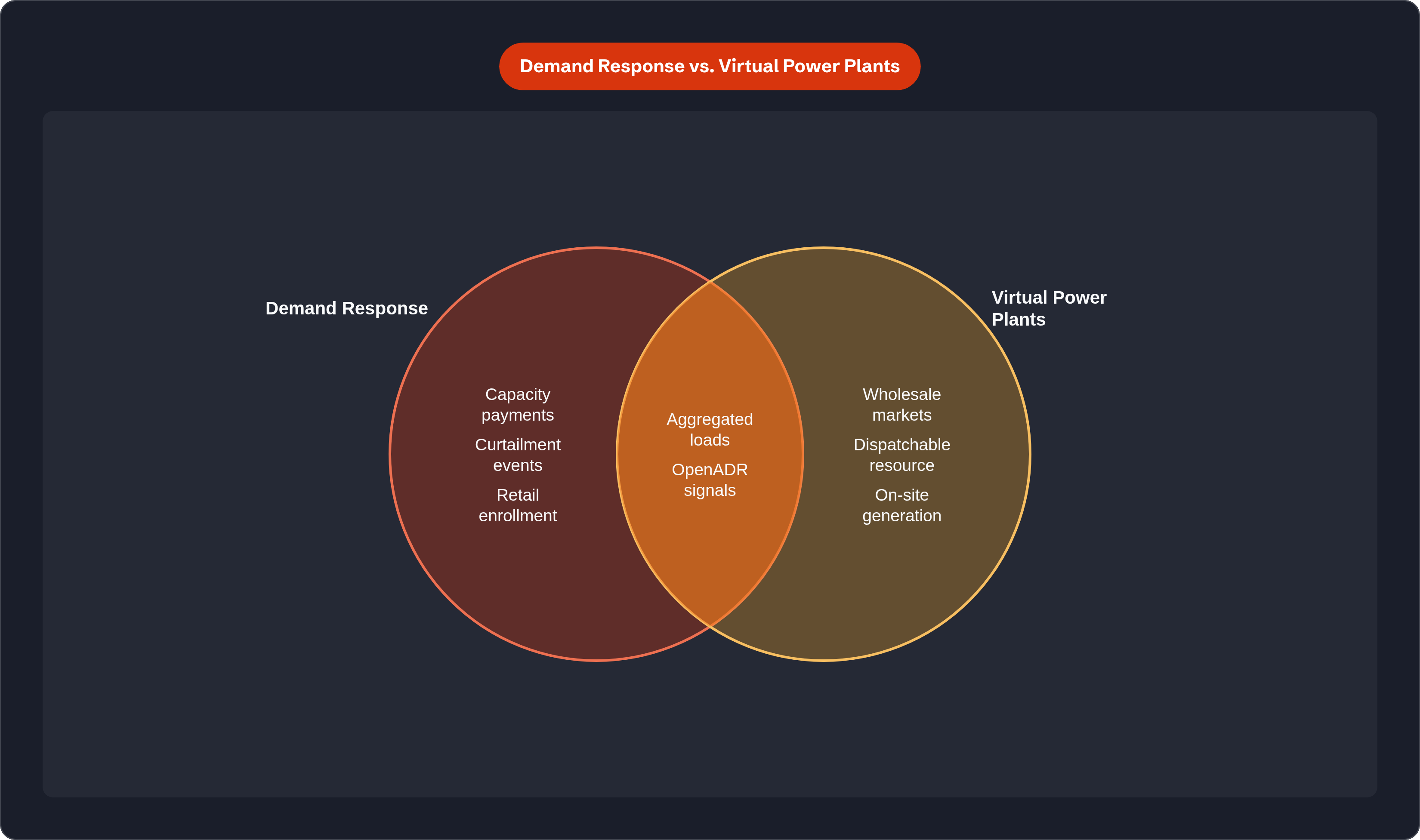
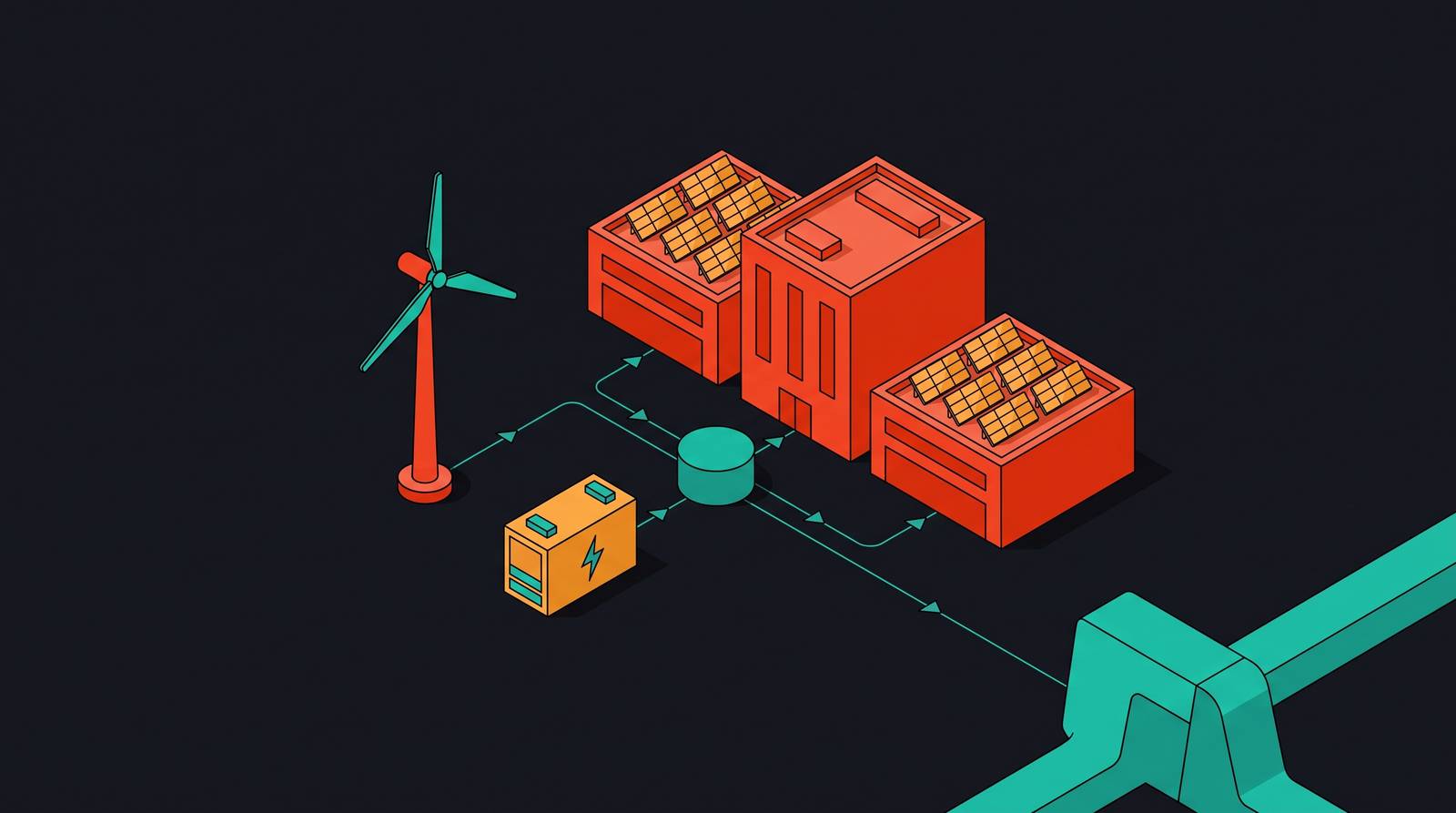
Demand response is the entry point. Virtual power plants are where the model matures. A VPP aggregates many buildings' flexible loads, on-site generation, and storage into a single dispatchable resource that, from a grid operator's perspective, looks and behaves like a power plant. Demand response is the largest segment within the VPP market, holding the largest share in 2024 per Precedence Research, which confirms that demand flexibility from buildings is the core value proposition, not solar panels or battery walls alone.
The Brattle Group found that California's VPP market potential exceeds 7,500 MW, representing more than 15% of peak demand and roughly five times the demand response capacity currently used for resource adequacy in the state. That gap between current use and potential is where the commercial opportunity lives. Scale-up can happen fast when enrollment infrastructure exists: a 90 MW residential VPP in Ontario enrolled roughly 100,000 homes in six months, and commercial buildings, with larger individual loads, can reach program thresholds with far fewer enrolled sites. For commercial building operators, VPP enrollment is the natural next step after basic demand response, offering deeper grid integration and access to wholesale markets that individual buildings cannot reach alone.
What a Building Needs to Qualify
Not every building can enroll today. Minimum requirements include interval metering at a resolution the utility program accepts, a BMS or BEMS capable of receiving external demand response signals, and documented controllable load that clears the program's minimum threshold. Automation depth is where buildings often fail in practice even when they technically meet minimums on paper. A building that can only respond manually is operationally eligible but practically unreliable. Utilities and aggregators favor buildings with automated, OpenADR-compatible controls because manual response does not satisfy the reliability expectations that make a building worth enrolling.
Baseline accuracy matters in ways that directly affect revenue. Utilities calculate curtailment against a consumption baseline, and inconsistent metering or poorly documented baselines reduce both credibility and payment. Older buildings face a retrofit decision, but the investment in BEMS and controls has a payback driven by multiple streams: capacity payments, energy savings, and avoided demand charges. Research published in 2024 found that smart buildings with automated energy management systems can reduce energy use by up to 30%, with demand response management cited as a key additional advantage. The efficiency gains often justify the investment independent of any demand response program. New construction has the clearest path: specifying OpenADR-compatible controls, networked HVAC and lighting, and smart metering at the design stage adds minimal cost and eliminates the largest enrollment barriers before they exist.
The Operational Cost of Staying Enrolled
Enrollment is a moment in time. Staying enrolled is an ongoing operation, and this is where many demand response programs quietly fall apart. Utilities update signal protocols, BEMS vendors release firmware changes, and OpenADR endpoints change. A building enrolled in multiple programs simultaneously is managing multiple API connections and data formats at once. That maintenance burden compounds as the number of programs and enrolled buildings grows.
Pre-built connectors to utility APIs, aggregator platforms, and BEMS systems reduce the engineering time required each time a program requirement or endpoint changes. Without that kind of managed infrastructure, the alternative is bespoke point-to-point integrations that require dedicated engineering effort for each utility relationship and break whenever either side updates their systems. For building operators running a single site, this is manageable. For developers building energy management or demand response products across dozens or hundreds of sites, it becomes the dominant operational burden because it multiplies with portfolio size. The build-versus-buy calculus on integration infrastructure favors managed approaches at scale, and the industry is moving in that direction for exactly this reason.
The Policy Tailwind Is Accelerating
The regulatory environment is changing in ways that will make demand response participation less optional over time. FERC Order 2222, finalized in 2020, requires wholesale markets to allow distributed energy resources including aggregated building loads to participate directly, removing a structural barrier that previously limited commercial buildings to retail programs. Texas Senate Bill 6, signed in 2025, mandates the creation of a demand response program specifically for large loads, a state explicitly formalizing what grid operators already know they need.
Internationally, the IEA notes that digital controls can automate up to 10% demand flexibility in the commercial building stock. The UK's Department for Business, Energy and Industrial Strategy projects that smart building technologies will reduce commercial energy use by up to 20% by 2030. Regulatory targets in the UK and EU are increasingly specifying smart-ready ratings, including the EU's Smart Readiness Indicator, that effectively require demand response capability as a baseline building feature. For building operators, programs are moving from voluntary to expected, and buildings that are not demand response-ready will face foregone revenue first, followed by compliance exposure as mandates expand. The buildings figuring this out now are collecting revenue and building operational readiness while the programs are still mostly voluntary. Waiting means retrofitting under pressure, when the cost of not participating stops being a missed opportunity and starts appearing on a compliance report.